Listening for the Human Voice: Reflections on AI, Authenticity, and Education

Foucault’s metaphorical hetertopia par excellence. By DALL-E

What happens when our classrooms are filled with voices that may or may not be human? This question lingered in the air long after my recent talk on AI integration and collaborative learning. The audience’s questions—thoughtful, urgent, sometimes skeptical—returned again and again to a single thread: how do we preserve authenticity when large language models can write like us, for us, and sometimes better than us?

It was clear from the discussion that many of us are grappling with a shifting landscape. On one hand, AI tools promise efficiency, personalization, and access. On the other, they provoke a deep discomfort. If students can simulate fluency and polish with a few prompts, what becomes of the messy, vulnerable, and transformative act of writing? What becomes of the human voice?

To me, the voice is not merely a stylistic feature. It is the trace of struggle, joy, and contradiction. It is shaped by context and culture, by emotion and lived experience. A voice is not just how something is said but why it is said, and to whom.

One student I quoted during the talk wrote, “The most valuable thing remains the human process: thinking, making mistakes, reflecting, and writing with one’s own voice.” That sentence stayed with many in the room. It reminds us that even as generative models grow more capable, they cannot reflect on what they create. They do not revise out of care or frustration. They do not hope to be understood.

This does not mean we must reject these tools outright. But it does mean we must ask better questions—of them, and of ourselves. Can we create learning ecologies that value process over polish? Can we design prompts that reward honesty, vulnerability, and lived insight? Can we teach students not only how to work with AI but how to assert their own voice in the conversation?

In the coming weeks, I hope to share further reflections and resources for instructors navigating these tensions. For now, I want to thank everyone who attended, listened, and challenged. Your questions revealed not only concern, but care—a desire to keep education rooted in connection, in process, in something beautifully human.

Let’s keep the conversation going.


If you attended the session and have further thoughts or experiences you’d like to share, I’d love to hear from you. Feel free to reach out or comment below.
Call for Submissions: Join the Queer Translation Collective Blog

Rekindling connections and forging new ones—join us in bringing our vision to life!

Dear Friends and Fellow Language Enthusiasts,

First and foremost, we want to extend our heartfelt apologies for not reaching out sooner. It’s been a journey, and we’re grateful for your patience and continued interest. We’re thrilled to share that our founder Jon Dell Jaramillo completed his PhD in March 2023! With this significant milestone achieved, he’s now turning his full attention back to the vision of our collective — bringing our community together to collaborate, create, and inspire.

We’re Excited to Hear from You!

The Queer Translation Collective is reopening its doors, and we warmly invite you to contribute to our blog. Whether you’ve been with us from the beginning or are newly discovering our community, your voice is vital to us.

What We’re Looking For:

  • Essays and Discussions: Insightful pieces on queer translation issues, challenges, and experiences.
  • Original Poetry: Poems that resonate with our collective’s philosophy and celebrate diverse voices.
  • Translation Samples: Excerpts of your translation work (cleared for publication) that showcase queer perspectives.
  • Visual Art and Images: Creative visuals that embody and emphasize our shared values and vision.

Why Contribute?

Your contributions will help spark meaningful conversations, foster connections, and build a supportive network of individuals passionate about language, identity, and expression. Together, we can explore the rich tapestry of queer translation and make a lasting impact.

Join the Conversation:

We encourage everyone who has visited our site, whether occasionally or regularly, to share their work and thoughts. Your unique perspective enriches our collective understanding and inspires others.

How to Submit:

Please send your submissions or any questions to odello3@gmail.com. Include a brief bio and any relevant information about your work. We can’t wait to hear from you!

Let’s Reconnect and Collaborate

This is an exciting new chapter for the Queer Translation Collective, and we want you to be a part of it. Let’s come together to create, share, and celebrate the potential of queer translation.

Warmest wishes,

Jon Dell Jaramillo Founder

Queer Translation Collective

Announcing the updated Manifesto

Dear readers and contributors, we have updated the manifest as of September 12. 2024 to enhance its clarity and to promote understanding. The link to the manifesto has been fixed so you can download a copy. Thank you for all your patience these years. The manifesto and site began as a project in 2017 based on a seminar at the University of Oregon called Bilingual Bodies in Translation, taught by Senior Lecturer II Emerita of Spanish Poet & translator Amanda Powell.

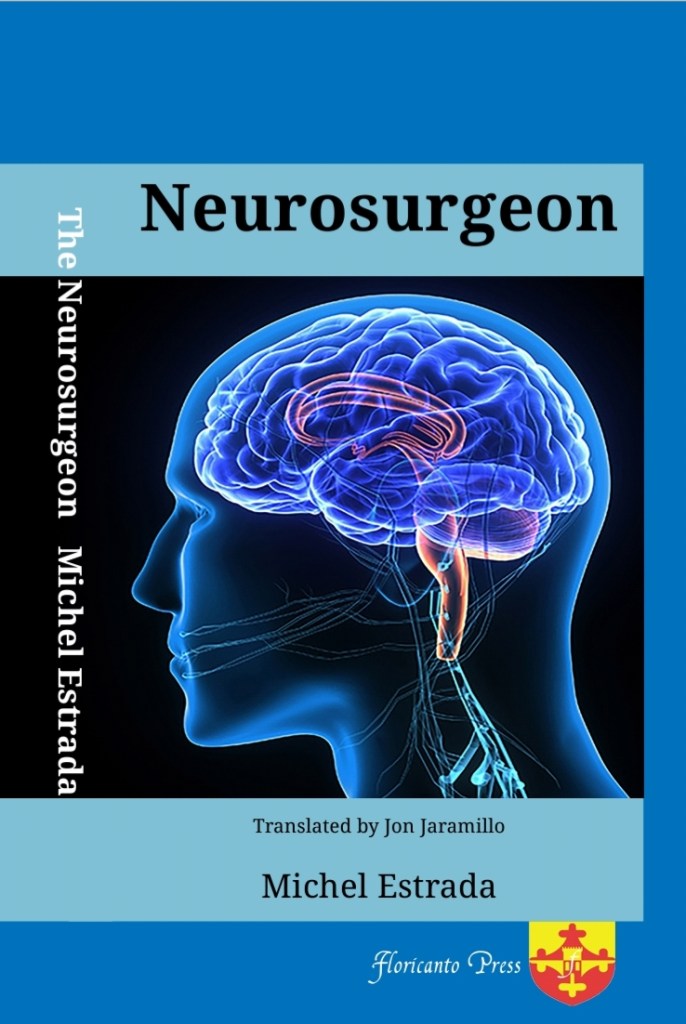
The Neurosurgeon by Michel Estrada, translated by Jon Jaramillo, is now available on Amazon and Barnes and Noble

Book cover

You can find the book on Amazon or Barnes and Noble for $17.95 and there is a Kindle Version of the book available as well.

Here is what the book is about: Michael the protagonist, who is both a neurosurgeon and a family man with a beautiful, supportive wife and a typical athletic son with aspirations of being a baseball player, has devised a way to annihilate degenerative neurons using nanotechnology, potentially providing relief from the disease of addiction for millions of people. However, major power brokers around the world will stop at nothing to either prevent him from realizing his capitalist endeavor with a philanthropic aim or seize his knowledge for their own nefarious purposes. This is a story destined for the big screen because its narrative mirrors the rotten core at the heart of the false dichotomy of extreme left and right political and economic interests. It shows us how even the most altruistic and best intentions can produce devastating consequences when pride blinds us from seeing that family is more important than monetary pursuits, fortune or even being a hero. How do we create justice and ensure peace when so many forces conspire to deny its materialization, when drug trafficking continues to be a cancer that eats away at our security, and exacerbates an already volatile world facing terrorism? Would you sacrifice your loved ones to save the world?

My Main Photo
Author: Michel Estrada in Cuba
Translator: Jon Dell Jaramillo

Queering Translation Caucus Spring Roundup set for May 23rd at 1pm PST

You are invited to the Queering Translation Caucus Spring Zoom Roundup!

For security purposes, if you wish to attend, please contact Jon Jaramillo at jonj@uoregon.edu to be put on the guest list and given the Zoom link and passcode.

Please join us on Zoom to catch up with fellow translators who you met at last summer’s ALTA 43’s Queer Translation Caucus and build on the success of our first meeting. We would like to continue to build our queer(ing) translation community and tell you about some exciting initiatives in the works. We look forward to your comments and suggestions about:

  1. organizing a queering translation colloquium where translators and academics can present projects
  2. creating a directory of queer(ing) translator profiles, with a list of publications, languages they translate, generic specialties, and contact information (we need to decide where to host the directory)
  3. growing the non-profit Queer Translation Collective by establishing a board of directors, an editorial board, and laying the groundwork for the publishing of a biannual digital zine on queering translation

Your input will help us build consensus and make decisions. We will have two breakout room sessions: the first will be a more intimate meet and greet and brainstorming about the colloquium, the second (optional) session will be devoted to business related to the QT Collective. In both sessions we will have shared document links posted so you can share your ideas. Those with the link and passcode can attend. We will use a waiting room for security.